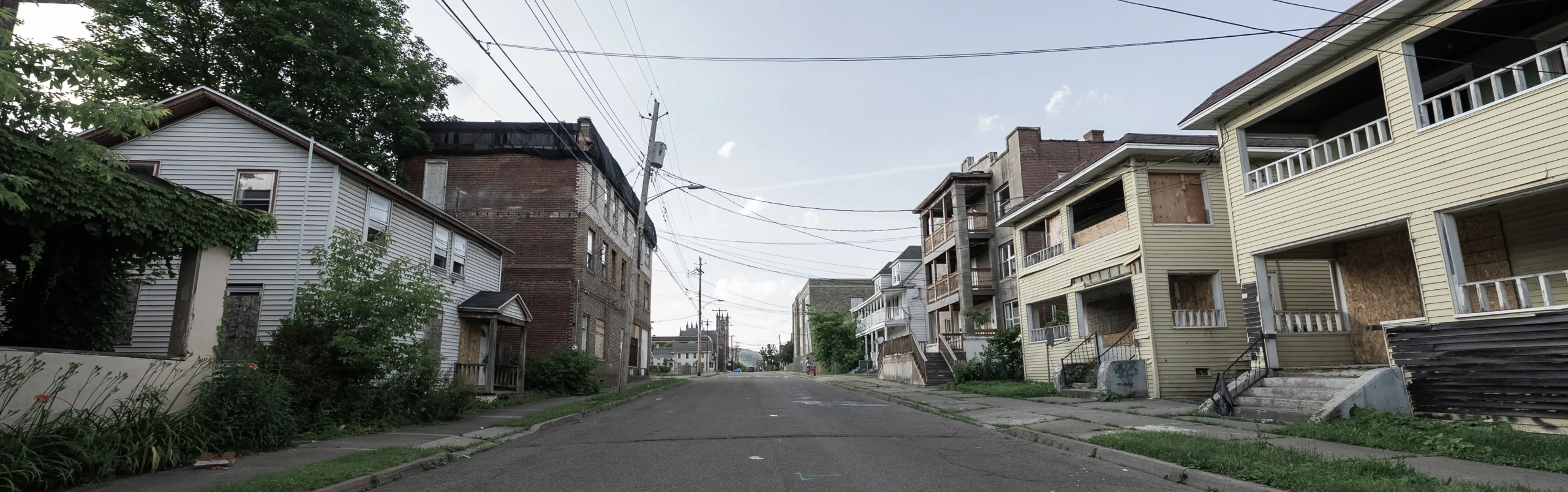
Know the state of Broome County’s housing crisis
Statistics and Studies
Statistics and Studies (housing, evictions, conditions)
Narrative:
Homelessness in Broome County encompasses both people sleeping in places not meant for habitation (under bridges, in cars, etc.) and those in emergency shelters or contracted hotel rooms. In 2023, nearly 2,000 people sought shelter—715 family members and 1,252 individuals. While family shelter use has jumped 180% since 2020, individual shelter stays fell 40%, masked by a 381% surge in unsheltered individuals (from 16 to 77 nightly). With roughly 150 shelter beds and another 300 hotel rooms—and rising hotel usage up by 247 beds since 2020—the County spends more than $7 million annually on emergency shelter, not counting Code Blue costs.
Yet true housing instability extends beyond shelter: of 831 homeless school-age children in 2022–23, 580 were “doubled-up” in overcrowded, temporary homes, driving up student mobility to 40% in some districts and inflicting lasting trauma. Meanwhile, the County’s housing stock skews heavily toward student (3,700 new off-campus beds since 2012) and luxury units (≈175 high-rent apartments by 2020), while only 500 affordable/subsidized units emerged over the same period. With average rents at $1,100 for a 3 BR—well above the $450–$625 affordable range for extremely low-income households—49% of all renters (89% of the lowest-income) are cost-burdened, and waitlists for subsidized housing average 26–32 months.
Broome County already has the data and proven policy tools to turn the tide—but lacks focused leadership. A four-pillar approach can work here: Prevent displacement through eviction protections and tenant‐rights enforcement; Protect the unhoused via nondiscrimination and safe‐camp ordinances; Preserve existing affordable units with proactive code enforcement and preservation incentives; and Produce new, deeply affordable homes via dedicated local funding (Broome County Housing Trust Fund) and inclusionary zoning. Our next steps must treat every unhoused person as a neighbor deserving dignity, not just a statistic, if we’re to move from crisis management to lasting solutions.
Analysis of Impediments to Fair Housing
Analysis of Impediments to Fair Housing
The 2015 Analysis of Impediments to Fair Housing in Binghamton aimed to identify barriers to fair housing choice, especially for protected classes, and to ensure the City met federal requirements tied to HUD funding. The study found persistent disparities in housing access, affordability, and quality, particularly for racial minorities, families with children, and people with disabilities, compounded by limited awareness and enforcement of fair housing rights. It concluded that improving outreach, education, and enforcement, as well as expanding affordable housing options, are key to reducing these impediments.
Binghamton Residential Market Analysis
Binghamton Residential Market Analysis
Real Estate Strategies was commissioned by Interface Studio to conduct a residential market analysis for the City of Binghamton as part of the Blueprint Binghamton comprehensive‐plan update. The study examined demographic, economic, demand and supply factors—through data analysis, stakeholder interviews and neighborhood fieldwork—to gauge the potential for new‐construction and rehabilitated housing across nine city neighborhoods . It concluded that overall household growth is minimal over the next five years, so “replacement” demand will drive roughly 175 for-sale and 207 rental units, while targeted infill and conversion projects—downtown mixed-income rentals, new for-sale homes in stable neighborhoods (Far West Side, South Side, Ely Park), and niche senior, student and “young professional” apartments—offer the best prospects to fill market gaps
Broome County Code Enforcement Study
Broome County Code Enforcement Study
The purpose of the Code Enforcement Study was to evaluate code enforcement operations across Broome County municipalities and explore options for regional collaboration or consolidation to improve service efficiency and reduce costs. The study concluded that while full countywide consolidation could save up to $1.5 million, shared services or regional hubs could also improve consistency and lower costs, particularly for small municipalities. However, successful implementation would require municipal willingness to cede some local control, which was not broadly evident at the time.