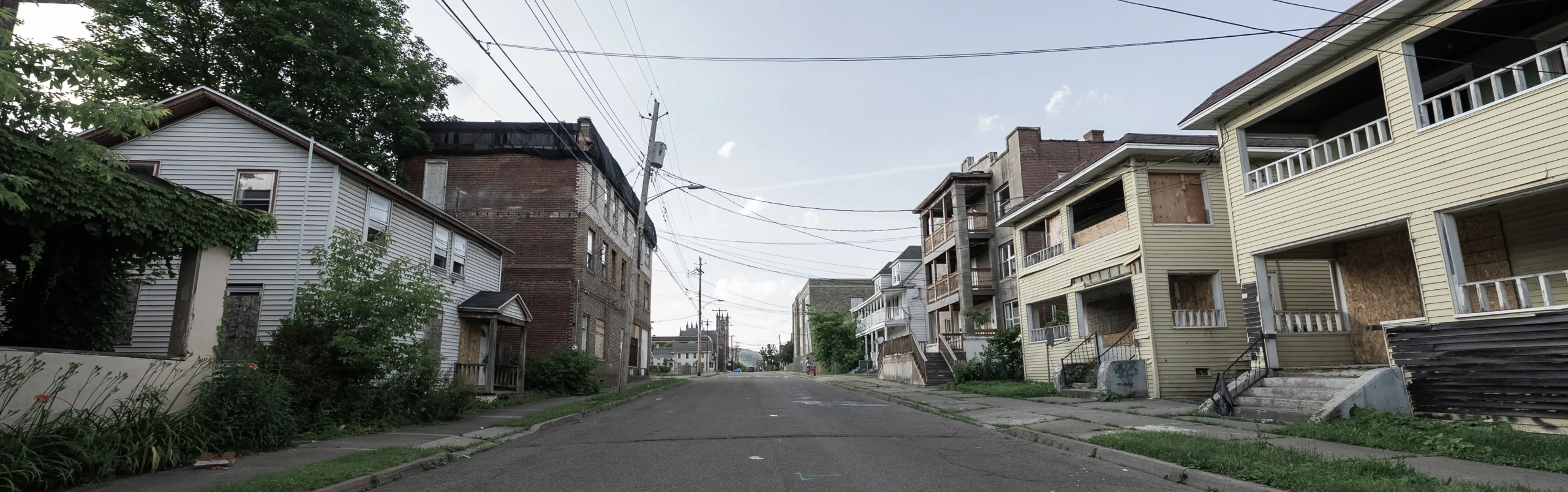
Know the state of Broome County’s housing crisis
Statistics and Studies
Statistics and Studies (housing, evictions, conditions)
Narrative:
Homelessness in Broome County encompasses both people sleeping in places not meant for habitation (under bridges, in cars, etc.) and those in emergency shelters or contracted hotel rooms. In 2023, nearly 2,000 people sought shelter—715 family members and 1,252 individuals. While family shelter use has jumped 180% since 2020, individual shelter stays fell 40%, masked by a 381% surge in unsheltered individuals (from 16 to 77 nightly). With roughly 150 shelter beds and another 300 hotel rooms—and rising hotel usage up by 247 beds since 2020—the County spends more than $7 million annually on emergency shelter, not counting Code Blue costs.
Yet true housing instability extends beyond shelter: of 831 homeless school-age children in 2022–23, 580 were “doubled-up” in overcrowded, temporary homes, driving up student mobility to 40% in some districts and inflicting lasting trauma. Meanwhile, the County’s housing stock skews heavily toward student (3,700 new off-campus beds since 2012) and luxury units (≈175 high-rent apartments by 2020), while only 500 affordable/subsidized units emerged over the same period. With average rents at $1,100 for a 3 BR—well above the $450–$625 affordable range for extremely low-income households—49% of all renters (89% of the lowest-income) are cost-burdened, and waitlists for subsidized housing average 26–32 months.
Broome County already has the data and proven policy tools to turn the tide—but lacks focused leadership. A four-pillar approach can work here: Prevent displacement through eviction protections and tenant‐rights enforcement; Protect the unhoused via nondiscrimination and safe‐camp ordinances; Preserve existing affordable units with proactive code enforcement and preservation incentives; and Produce new, deeply affordable homes via dedicated local funding (Broome County Housing Trust Fund) and inclusionary zoning. Our next steps must treat every unhoused person as a neighbor deserving dignity, not just a statistic, if we’re to move from crisis management to lasting solutions.
Broome County Housing Needs Assessment
Broome County Housing Needs Assessment
This study highlights critical housing challenges in the county, including a need for housing interventions to support at least 26,674 households due to factors like high cost burdens, displaced workers, and inadequate housing quality. The assessment reveals that residents perceive limited availability of affordable housing and shows a strong preference for single-family homes in safe, appealing neighborhoods. The report also proposes six key strategies to address these issues, such as enhancing implementation capacity, improving the existing housing stock, supporting new housing developments, and promoting equity and fair access to housing
Analysis of Impediments to Fair Housing
Analysis of Impediments to Fair Housing
Though not published by City leadership, The 2020 Analysis of Impediments to Fair Housing Choice for the City of Binghamton identifies significant barriers to fair housing, such as a lack of quality, affordable housing that disproportionately affects racial minorities, families with children, and people with disabilities. The report emphasizes the need for improved code enforcement, more fair housing education, and targeted policies to increase investment in low-income neighborhoods. It also underscores the importance of addressing sexual harassment by landlords, source of income discrimination, and the limited supply of accessible housing for people with disabilities.
End Family Homelessness Proposal
End Family Homelessness Proposal
The proposal outlines a collaborative plan to end family homelessness in the City of Binghamton by 2020, leveraging targeted collaboration, data-driven prioritization, and political will. It identifies the primary barriers as insufficient affordable housing and recommends immediate actions like utilizing vacant city lots for supportive housing projects and strengthening housing code enforcement. By fostering collaboration among city, county, and nonprofit partners, the plan aims to provide permanent housing solutions and prevent families from returning to homelessness.
Broome County Housing Study
Broome County Housing Study
The study identified significant gaps in Broome County’s housing stock, particularly for first-time homebuyers, young professionals, and higher-income renters, creating barriers to workforce recruitment and community vitality. It recommends a two-pronged approach: revitalizing existing housing stock in targeted neighborhoods with incentives and gap financing, while also promoting new construction at moderate price points to meet current market demand. The conclusions highlight the need for collaboration between public, private, and nonprofit entities to achieve these housing goals.
RHNNY Rural Broome County Housing Supplement
RHNNY Rural Broome County Housing Supplement
The report underscores that safe, affordable, and accessible housing remains a critical unmet need in rural Broome County. Persistent housing insecurity, coupled with a lack of supportive services and collaboration among housing groups, has created significant challenges for low-income rural residents. Addressing these issues will require increased infrastructure investments, better coordination among advocacy groups, and innovative housing solutions to create a stronger and healthier community